
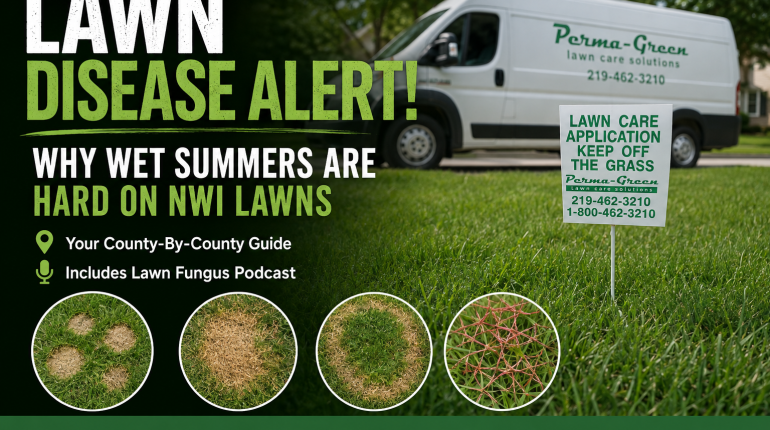
Lawn Disease Symptoms: How to Tell If It’s Fungus, Heat, or Something Else
A lawn that looks stressed right now could be dealing with one of several different problems - and they don’t all have the same fix. This has been one of the wettest summers on record, creating a perfect storm of conditions for lawn disease. But heat stress and drought stress show up too, and mistaking one for the other usually means treating the wrong thing.
Heat Stress, Drought Stress, or Disease? The Quick Way to Tell
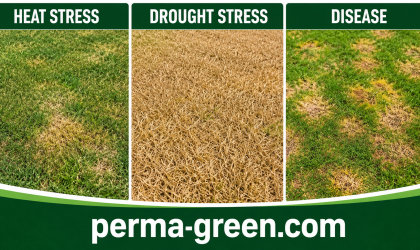
Heat and drought stress tend to show up evenly across the lawn - a general grayish or dull color, blades that fold or wilt uniformly, often bouncing back somewhat overnight once temperatures drop. Disease, on the other hand, tends to show up in defined shapes: patches, rings, or spots that are noticeably different from the healthy turf around them.
This Season’s Perfect Storm for Fungal Disease
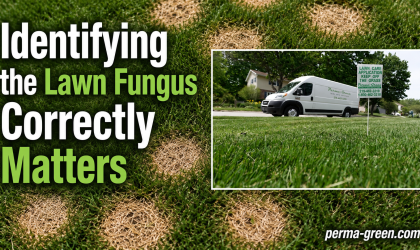
If what you’re seeing is patchy or ring-shaped rather than even, you’re likely looking at one of a handful of common fungal diseases that thrive in exactly the conditions Northwest Indiana has had this summer - humidity, extended wet periods, and grass that doesn’t get a chance to fully dry out between rain events. See why lawns get fungus and the four types to know for a full breakdown of each.
For the full regional picture on why this humidity is causing grass disease right now, see Perma-Green’s Northwest Indiana’s Extreme Humidity Causes Grass Disease.
Prefer to listen? Steve covers this topic in the podcast episode ENCORE: Lawn Fungus! What is Turfgrass Disease & What Can You Do!.
Why Location Matters in Northwest Indiana
One more thing worth knowing before you decide how to treat it: Northwest Indiana’s soil isn’t the same everywhere, and that matters more than people expect. A lawn in Valparaiso’s clay-heavy ground holds moisture very differently than a lawn in DeMotte’s sandy soil, so two lawns dealing with this same wet summer can end up with two different problems - one fighting fungal disease from standing moisture, the other drying out fast between storms. Treating both the same way is one of the most common mistakes homeowners make.
For the full county-by-county soil breakdown, see Lawn Disease Alert: A County-by-County Northwest Indiana Guide.
Get a Professional Diagnosis

If you’re not sure what you’re looking at, that’s exactly what a Perma-Green lawn evaluation is for. Our OISC-certified technicians can tell you on-site whether you’re dealing with disease, heat stress, drought stress, or some combination - before you spend money or water on the wrong fix. See the full range of services this can lead to: Lawn Care Services.
What Comes Next: Fall Lawn Recovery
If fungus, heat stress, drought stress, heavy rain, or thinning turf weakened your lawn this summer, fall is the recovery window.
Fall fertilizer helps the lawn rebuild strength, support root growth, store nutrients before winter, and prepare for healthier growth when the ground thaws in spring.
READ:
Northwest Indiana Lawn Recovery Starts This Fall
Why Fall Fertilizer Is the MVP Treatment for Northwest Indiana Lawns
Not sure what is affecting your lawn?
Get a free Perma-Green lawn evaluation before guessing at the fix.